NXP PCA9505DGG,118: A Comprehensive Technical Overview of the 40-Bit I2C GPIO Expander
In the realm of embedded systems and IoT, the need for additional General-Purpose Input/Output (GPIO) pins is a common challenge. Microcontrollers often have a limited number of dedicated I/O ports, creating a bottleneck for complex designs. The NXP PCA9505DGG,118 addresses this issue directly, serving as a highly integrated 40-bit I2C-bus I/O expander that provides a robust solution for system expansion.
Architecture and Core Functionality
The PCA9505DGG,118 is built around a fundamental principle: translating I2C-bus commands into parallel port expansion. It features a single 40-bit parallel I/O port, which can be individually configured as either an input or an output. The device communicates with a host microcontroller (the master) via a simple, two-wire I2C-bus serial interface (SCL and SDA), significantly reducing the number of GPIOs required on the host to control a vast number of signals.
A key architectural highlight is its built-in 26 mA sink capability per I/O bit. This allows each output to directly drive LEDs or other modest loads without requiring external buffer circuits, simplifying board design and reducing the overall Bill of Materials (BOM). The I/O ports are designed to be 5V tolerant, even when the device itself is operating at a lower VDD (e.g., 2.3V to 3.6V). This feature is critical for interfacing with legacy peripherals or other system components that still operate at 5V logic levels, ensuring seamless integration into mixed-voltage systems.
Key Features and Advantages
Massive Expansion: A single device provides 40 additional GPIO pins, freeing up critical microcontroller resources.
Hot Insertion Capability: The device incorporates circuitry that suppresses glitches on the SDA and SCL lines during live insertion/removal of the card. This makes it exceptionally well-suited for hot-swappable applications, such as line cards in telecom and networking infrastructure.
Hardware Address Selection: Three address pins (A0, A1, A2) allow for up to eight identical devices to be connected on the same I2C-bus, enabling a theoretical expansion of up to 320 I/O bits without bus contention.
Interrupt Output: An open-drain interrupt pin (INT) is asserted low whenever a change of state occurs on any input port. This allows the microcontroller to be efficiently serviced via interrupts instead of constantly polling the expander, saving processing power and improving system responsiveness.
Low Standby Current: The device is optimized for power-sensitive applications, consuming minimal current when in standby mode.
Application Scenarios
The versatility of the PCA9505DGG,118 makes it a cornerstone component in numerous applications. It is ideal for use in:
Telecommunications and Networking Equipment: For controlling LEDs, fan monitoring, and reading DIP switches on hot-swappable line cards.
Industrial Control Systems: For monitoring a large number of digital sensors and controlling actuators.
Server Systems: For board management, including status monitoring and fan speed control.
Advanced User Interfaces: For scanning large keypad matrices and controlling numerous status indicators.
Package and Ordering Information
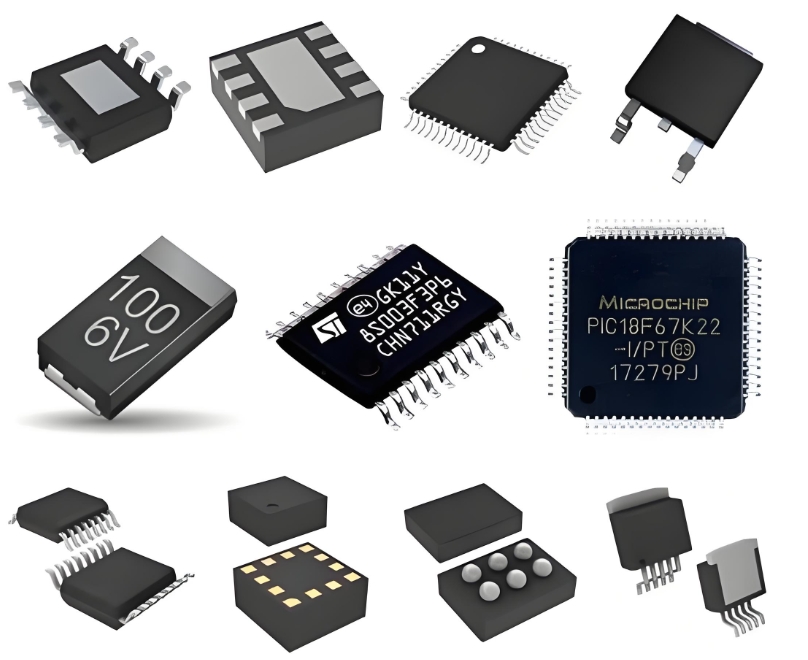
The suffix "DGG" in the part number denotes the package type: a TSSOP-56 (Thin Shrink Small Outline Package). This compact surface-mount package is designed for space-constrained PCB designs. The ",118" is a manufacturer-specific suffix often related to tape and reel packaging for high-volume, automated assembly.
ICGOODFIND: The NXP PCA9505DGG,118 stands out as a powerful and flexible solution for system designers grappling with I/O limitations. Its combination of a high number of 5V tolerant ports, high sink current capability, and robust hot insertion features makes it an indispensable component for modern, complex electronic systems requiring reliable and extensive I/O expansion.
Keywords: I2C-bus GPIO Expander, 40-bit I/O Port, 5V Tolerant, Hot Insertion, LED Sink Driver.

